
A workplace dispute between a Gen Z employee and a company’s Human Resources department has sparked widespread online debate after the worker reportedly refused to return from suspension despite being urgently recalled.
The incident, shared by a colleague on social media this week, highlights growing tensions between productivity expectations and traditional workplace policies.
According to the narration, the issue began when the employee repeatedly ignored warnings about dressing casually to work. Despite multiple cautions from HR, the worker maintained that performance should take priority over appearance.
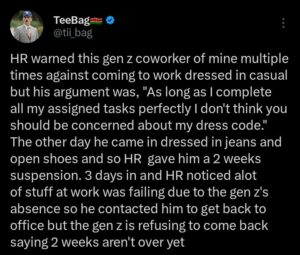
“HR warned this Gen Z coworker multiple times against coming to work dressed casually, but his argument was that as long as he completes his tasks perfectly, they shouldn’t be concerned about his dress code,” the colleague said.
The situation escalated when the employee reportedly showed up in jeans and open shoes, prompting HR to issue a two-week suspension.
However, just three days into the suspension, the company allegedly began facing operational challenges tied to the employee’s absence. In response, HR contacted him and asked him to resume work earlier than scheduled.
In a surprising twist, the worker declined the request.
“Three days into the suspension, HR noticed that a lot of things were failing due to his absence and contacted him to return, but the Gen Z worker refused, saying the two weeks were not over yet,” the narration continued.
The incident has reignited conversations about workplace flexibility, dress codes, and how younger employees are challenging long-standing corporate norms. Many online users have drawn parallels to earlier global debates—especially around 2021—when remote work and evolving office cultures pushed companies to rethink rigid policies.
Reactions online have been mixed.
Some users sided with the employee, arguing that competence should matter more than dress code:
“If he delivers results, why does it matter what he wears? This is outdated thinking.”
“They punished him and now need him back? He’s right to stick to the terms.”
Others, however, supported HR’s decision, emphasizing professionalism:
“Workplace rules exist for a reason. If everyone dresses how they like, it becomes chaotic.”
“You can be good at your job and still respect company policies.”
The situation continues to fuel debate over whether modern workplaces should prioritize output over traditional standards—or find a balance between both.
Check the post below…
Published by Ejoh Caleb