
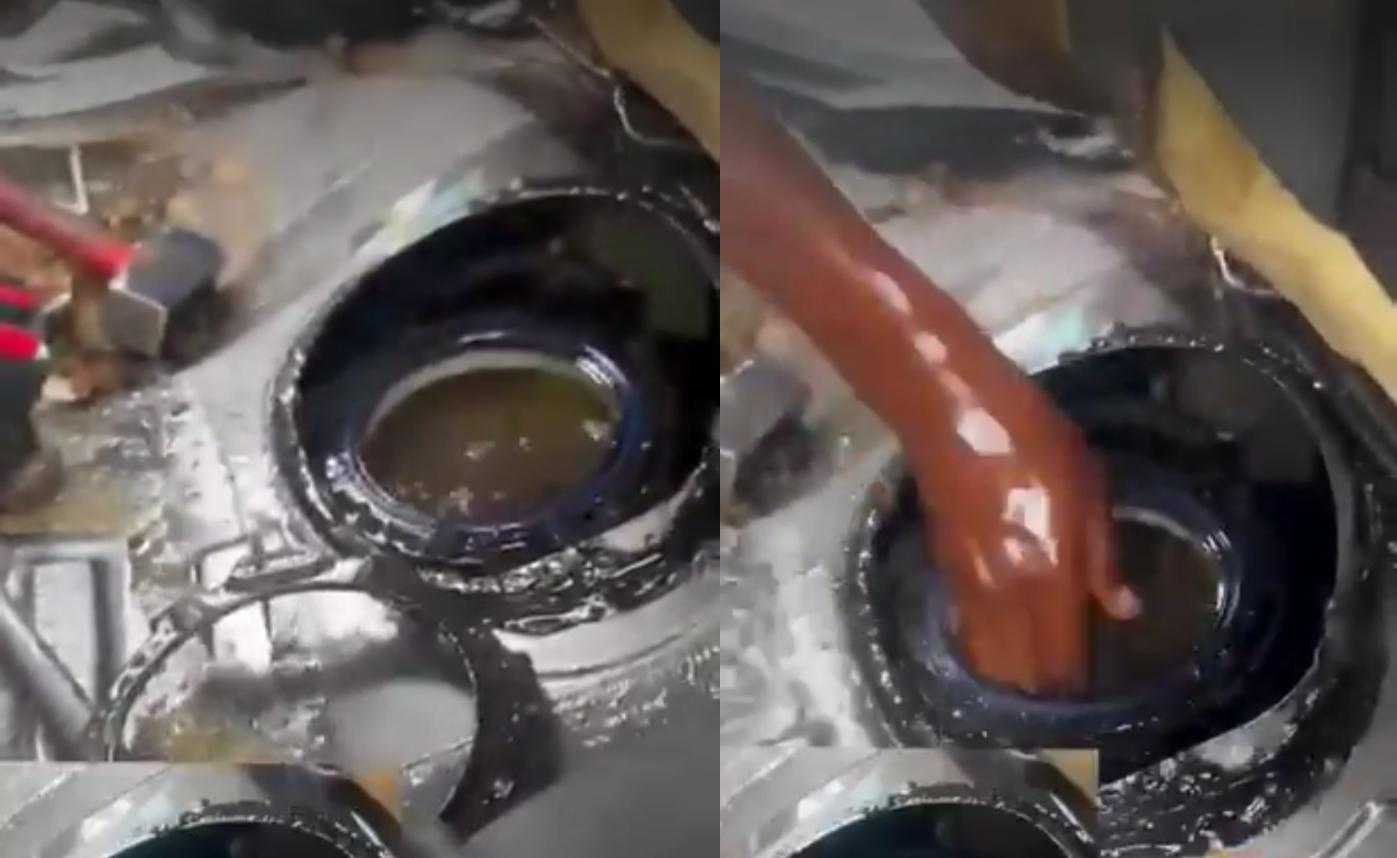
A video making the rounds online shows a visibly distressed man alleging that the fuel he purchased at a Mobil filling station at Jakande, Lagos, was mixed with water, rather than being the pure Premium Motor Spirit (PMS, commonly called petrol) he paid for.
In the clip, the man is seen pointing to the fuel he says he bought, insisting it is contaminated. Mobil has not been reported to have responded publicly to this specific allegation, and it has not been independently verified by regulators at the time of writing.
An Allegation That Fits a Familiar, Troubling Pattern
This is not the first time Nigerian motorists have accused filling stations of dispensing fuel tainted with water or other impurities. In one widely reported case in Ogun State, motorists discovered their tanks had been pumped with water instead of petrol at a filling station in Abeokuta, sparking public anger and forcing the station to begin repairing affected vehicles.
The problem is not confined to petrol stations serving cars alone. In 2023, a batch of contaminated jet fuel led to a fleet of aircraft being grounded in Nigeria after significant volumes of water were found in their fuel tanks, with one aircraft becoming airborne before suffering malfunctions in flight. Investigators at the time pointed to problems with storage infrastructure, noting that water can gather in low spots within pipelines, from rainwater contamination, temperature changes during storage, or moisture in the air when tanks are opened.
More broadly, adulterated fuel scandals have hit Nigeria’s downstream sector repeatedly in recent years. One episode involving fuel with excess methanol content led regulators to admit that a limited quantity of PMS with methanol levels above Nigeria’s specification had entered the supply chain, prompting the isolation and withdrawal of affected batches and the suspension of several filling stations found to have received the tainted product.
What Causes Water and Impurities to End Up in Fuel? (Causes Behind Contamination Complaints)
Storage tank problems. Underground storage tanks can develop leaks or condensation over time, allowing rainwater or groundwater to seep in and settle at the bottom of the tank, where it can then be pumped out along with the fuel.
Contamination during transport. Fuel passes through several hands, tankers, depots, and pipelines, before it reaches a retail pump, and industry figures have acknowledged that contaminated products can enter the supply chain at the depot level and be distributed to multiple stations before the problem is caught.
Weak, understaffed regulatory oversight. Reporting this year found that the downstream regulator rarely inspects retail outlets to ensure pumps and storage systems are functioning properly, with officials admitting the regulator lacks sufficient personnel to monitor thousands of outlets nationwide, leaving room for problems to go undetected.
Deliberate adulteration for profit. In some documented cases, unscrupulous operators have been accused of deliberately diluting fuel with water or cheaper substances to stretch their stock and increase profit margins, particularly during periods of scarcity or high prices.
The Effects on Motorists and Public Trust
Contaminated fuel is not just an inconvenience; it can cause serious and expensive damage. Water in a fuel tank can lead to engine stalling, corrosion, and in more serious cases, complete engine failure requiring costly repairs. In the aviation case referenced above, the consequences included in-flight malfunctions, underscoring how dangerous contaminated fuel can be beyond just financial loss.
Beyond individual losses, each new allegation chips away at public confidence in filling stations generally, including reputable, well-established brands. When a widely trusted station is accused of dispensing bad fuel, ordinary motorists are left wondering whether any pump can be trusted, and many resort to informally “testing” fuel or avoiding certain stations altogether based on rumour rather than verified fact.
What Can Affected Motorists Do? (Possible Solutions and Steps to Take)
Nigeria’s downstream regulator, the Nigerian Midstream and Downstream Petroleum Regulatory Authority (NMDPRA), has repeatedly stated that consumers have a right to escalate fuel quality complaints.
Report immediately to NMDPRA. Officials have stated that any Nigerian who buys a petroleum product that is not up to standard has the right to reach out to any NMDPRA office nationwide to lay a complaint for the matter to be addressed.
Preserve evidence. Motorists are encouraged to keep the fuel receipt, note the pump number and time of purchase, and where possible, retain a sample of the suspect fuel for testing.
Request an on-the-spot inspection. NMDPRA inspection teams are said to be equipped with calibrated measuring devices and quality testing equipment specifically to verify complaints of under-dispensing or substandard product.
Report to the station and demand documentation. Filling stations are expected to log and respond to complaints, and affected customers should ask for a written acknowledgment of their report as proof that it was made.
Seek compensation for damage. In past adulterated fuel episodes, authorities have publicly backed the position that consumers whose vehicles are damaged by bad fuel are entitled to redress and compensation, not just an apology.
Our Thoughts
What bothers me most about stories like this is how familiar they’ve become. A motorist pulls up to a station bearing a name Nigerians have trusted for decades, pays good money, and drives off worried his engine might fail him on the road. Whether or not this particular allegation is confirmed, the fact that it is instantly believable to so many people tells us something important: trust in the fuel supply chain is thin, and it has been worn down by years of similar stories that were never fully resolved or explained to the public.
Until NMDPRA can show, visibly and consistently, that every credible complaint leads to a real inspection, a real result, and real compensation where warranted, motorists will keep filming these videos, and Nigerians will keep wondering whether the fuel in the pump is really what it claims to be.
Published by Ejoh Caleb