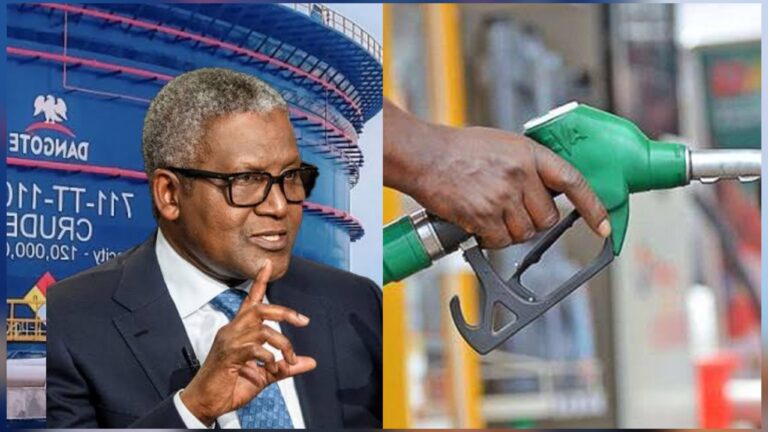
Fuel marketers have been informed of a fresh reduction in the gantry price of Premium Motor Spirit (PMS), commonly known as petrol, by Dangote Petroleum Refinery following a recent easing of tensions in the international crude oil market.
According to a circular issued to customers on Monday, the refinery attributed the price adjustment to improving stability in global energy markets after months of volatility caused by geopolitical tensions in the Middle East.
Under the revised pricing structure, the gantry price of petrol has been reduced from ₦1,250 per litre to ₦1,175 per litre, representing a ₦75 per litre decrease.
The refinery also reviewed its coastal benchmark price downward from ₦1,595,790 per metric tonne to ₦1,495,215 per metric tonne.
Dangote Refinery stated that the new rates took effect from midnight and noted that all previously unlifted volumes at the gantry would be repriced from 12:00 a.m. on June 16, 2026.
The company reaffirmed its commitment to maintaining stable fuel supply and efficient service delivery across its distribution network.
Industry monitoring platform petroleumprice.ng reports that Dangote Refinery currently remains one of the most competitive suppliers in the market, with petrol selling at around ₦1,240 per litre at several retail outlets.
Why Prices Are Falling
The latest adjustment comes as global crude oil prices respond to improving diplomatic engagement between the United States and Iran over strategic maritime routes, reducing fears of major supply disruptions.
During the peak of the tensions, crude oil prices reportedly surged from about $83 per barrel to over $120 per barrel, contributing to sharp increases in fuel prices worldwide.
In Nigeria, petrol prices climbed from roughly ₦830 per litre to around ₦1,300 per litre, while diesel and aviation fuel prices also recorded significant increases.
What It Means for Consumers
Analysts believe the reduction in Dangote Refinery’s ex-depot price could eventually translate into lower pump prices across the country if the current stability in global oil markets is sustained. However, the extent and speed of any reductions at filling stations will depend on marketers’ operating costs, transportation expenses, and existing stock levels.
Reactions Online
Supportive reactions
“This is good news for motorists and businesses struggling with high transport costs.”
“At least we’re beginning to see fuel prices respond to changes in the global market.”
“A ₦75 reduction is a step in the right direction.”
Skeptical reactions
“Will filling stations actually reduce pump prices quickly?”
“Many marketers still have old stock bought at higher prices.”
“We need to see the reduction reflected at the pumps before celebrating.”
Neutral reactions
“The market will determine how much consumers eventually benefit.”
“Global crude prices remain unpredictable, so the trend needs to be sustained.”
“This is one of several factors that influence petrol prices in Nigeria.”
Funny reactions
“My generator has already started smiling.”
“Transport fare conductors are currently pretending they didn’t hear the news.”
“Now we’re waiting to see if bus drivers will reduce fares or develop temporary hearing problems.” 😄
Published by Ejoh Caleb