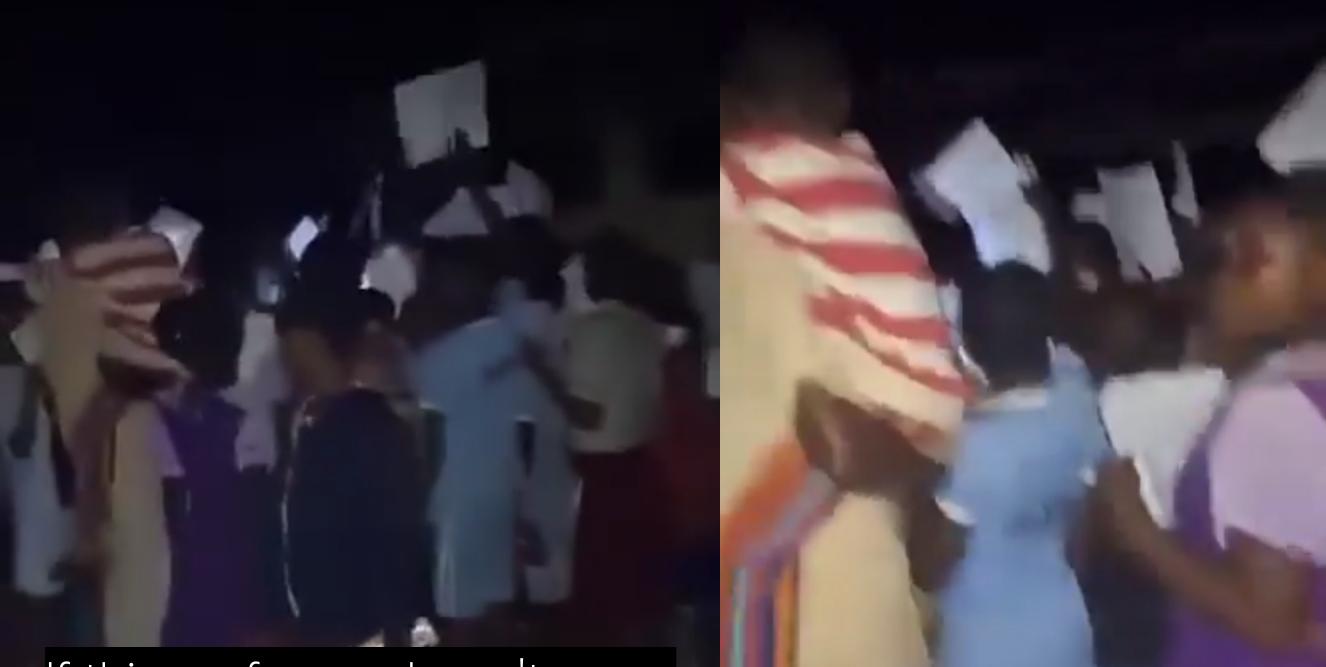
Parents in Umuduru Amiri, a community in Oru East Local Government Area of Imo State, are demanding answers from the state Commissioner for Education after pupils of Community Primary School were reportedly still writing their Common Entrance Examination as late as 8 p.m. on Friday.
According to accounts shared online, invigilators and supervisors assigned to the school arrived late, delaying the start of the exam by hours. By the time the children finished, night had fully fallen. Parents were said to have arrived at the school with lanterns and torchlights to find and walk their children home in the dark.
What Was Supposed to Happen
The Common Entrance Examination is a nationwide test that primary school pupils in Nigeria must pass to gain admission into government-owned secondary schools. It is usually written alongside the First School Leaving Certificate (FSLC) examination, which formally certifies that a child has completed primary school. Both exams are normally scheduled to start early in the morning and end well before evening, since the pupils involved are mostly under 12 years old.
This Was Not Only Umuduru Amiri’s Problem
What happened in Umuduru Amiri was part of a much bigger, statewide failure. Across Imo State on Friday, primary school pupils at several centres, including Shell Camp Primary School, Kingdom Heritage Model School, World Bank Primary School, and Barclays International School in Irete, were still writing their exams past 7 p.m. Heavy rain that morning was blamed for delaying the distribution of question papers and answer booklets to many centres. Some parents said question papers were even in short supply, forcing pupils to share booklets or write the exam in shifts.
A Recurring Problem: Similar Cases Before Now
This is not an isolated failure. Nigerian students have faced similar ordeals in other exams in recent months:
In June 2026, WAEC candidates in several states, particularly in Ibadan, Oyo State, were forced to write West African Senior School Certificate Examination (WASSCE) papers late into the night, some past 10 p.m., after examination materials arrived hours behind schedule. Videos showed students using torchlights and phone flashlights to see their answer sheets.
The same June 2026 WAEC delays were also reported by Kanyi Daily, which documented centres where an exam scheduled for 2 p.m. had still not started by 8 p.m., and quoted students who waited more than four hours for question papers to arrive.
These earlier incidents drew similar criticism: that Nigerian examination bodies and state ministries of education repeatedly fail to plan for bad weather, materials logistics, and adequate staffing on exam day, despite the pattern being well known.
Why the Delay Happened, and What It Cost the Children
Parents who spoke publicly said the explanation given by officials was that examination materials arrived late because of the rain. But many parents rejected that excuse, pointing out that the exam date had reportedly already been moved at least once before Friday’s sitting.
The human cost was significant. Children as young as ten or eleven left home before sunrise, some walking through heavy rain to reach their exam centres by 9 a.m. Many sat outside or in classrooms for most of the day without adequate food, waiting for papers that had not arrived. By evening, exhausted and hungry pupils were still expected to concentrate on a high-stakes exam that determines their secondary school placement. In Umuduru Amiri, some pupils reportedly had to be walked home by parents carrying lanterns and torchlights because there was no electricity to light their path after dark.
How Nigerians Reacted Online
Frustration spread quickly on social media as parents and observers described what they witnessed at various centres across the state.
One parent, writing on Facebook, called for the sack of whoever was responsible for organising the exams, describing the handling of the process as incompetent and disorganised, and noting that pupils were still writing local exams as late as 6:30 p.m.
Another parent described the state’s education system as having failed completely, pointing out that children who left home before 8 a.m. in heavy rain were still writing an exam that had already been postponed once before.
Several other parents used the moment to call for disciplinary action against officials of the state’s Ministry of Primary and Secondary Education.
What This Means for Nigeria’s Education System
Incidents like this feed into a wider national conversation about the state of public basic education in Nigeria. Imo is not the only state where exam-day mismanagement has embarrassed officials and alarmed parents; similar complaints about late materials, poor logistics, and exhausted pupils have surfaced in other states in past years. Each new case adds to a growing public perception that state ministries of education are not investing enough in the basic planning needed to protect children during high-stakes exams.
This matters beyond Imo State because Common Entrance results shape which pupils get into government secondary schools nationwide, a system many working-class Nigerian families depend on since private secondary education is often unaffordable. When the process is mishandled, it does not just inconvenience one community; it chips away at public confidence in state-run education generally, and adds to the argument, often made by critics of government schooling, that public education in Nigeria is underfunded and poorly supervised compared to private alternatives. It also raises safety concerns nationally, since walking children home in the dark, sometimes along rural roads with no streetlights, carries real risk in any part of the country.
Possible Solutions
Education stakeholders and concerned parents have suggested several steps that could prevent a repeat of Friday’s events:
Deploying examination materials to all centres at least a day in advance, rather than on the morning of the exam.
Building weather contingency plans into the exam schedule, including backup dates that do not require last-minute rescheduling.
Splitting the Common Entrance and FSLC exams across separate days, since requiring pupils to sit both in one day increases the risk of long, exhausting sessions.
Ensuring every centre has enough question papers and answer booklets printed and counted ahead of time.
Setting a firm cut-off time after which an exam session must be suspended and rescheduled, rather than allowed to run into the night.
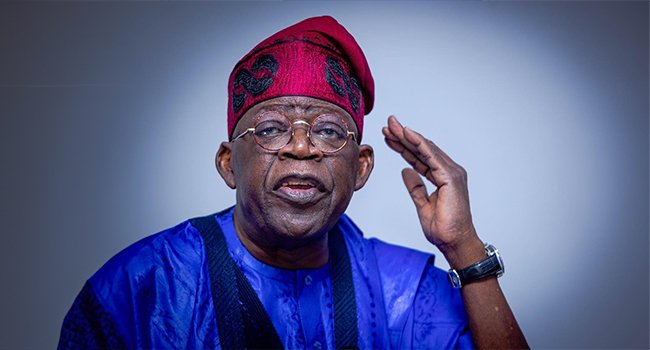
When contacted for a reaction, the Commissioner for Primary and Secondary Education, Prof. Bernard Ikegwuoha, declined to comment, saying only that he did not have anything to say at the time.
Our Take
No child should be writing an exam that decides their academic future at 8 p.m., in the dark, exhausted and hungry. What happened in Umuduru Amiri, and across Imo State more broadly, is not simply bad luck with the weather. Rain is predictable in July, and any ministry organising a state-wide exam should have a plan for it. The image of parents walking through the dark with lanterns and torchlights to find their children is a powerful symbol of a system that failed the people it was supposed to serve. Officials owe these families more than silence. At minimum, the state should explain what went wrong and commit publicly to fixing it before the next round of exams.
Published by Ejoh Caleb