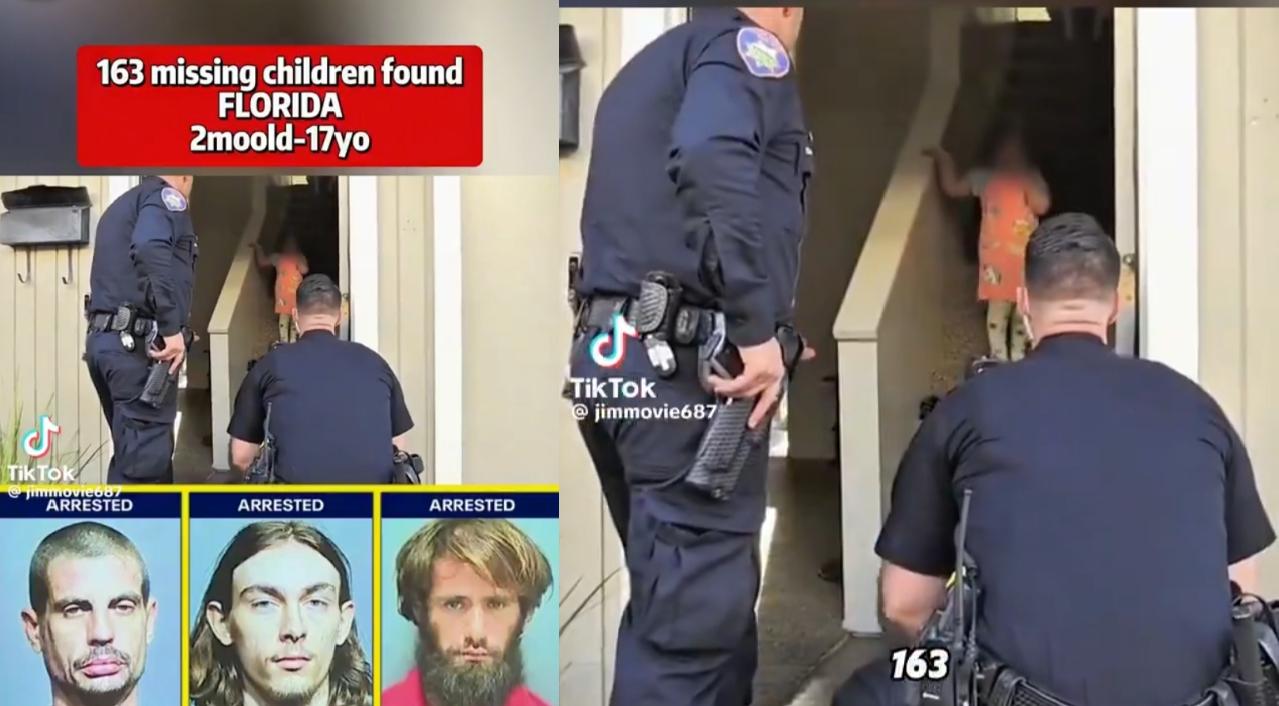
Law enforcement agencies in the United States have recovered 163 missing children, ranging in age from just two months to 17 years old, through a five-day operation described as the largest of its kind in Florida’s history. Florida Attorney General James Uthmeier announced the results of Operation Statewide Shield on Tuesday, saying many of the children had suffered abuse, neglect and exploitation, with a significant number identified as human trafficking victims.
The operation, coordinated by the Florida Department of Law Enforcement alongside federal, state and local partners, recovered children across Florida and reached into six other US states and territories, as well as 12 foreign countries, including Brazil, Mexico, Jamaica and Ghana. Within Florida itself, recoveries were spread across the state: 46 children in the Tampa Bay region, 41 in Miami, 32 in Jacksonville, 21 in Orlando, 12 in Fort Myers, eight in Pensacola and three in Tallahassee.
Officials said the recovered children’s cases varied widely, ranging from runaways and custody disputes to abuse, neglect, foster care situations and trafficking. Three people have been arrested so far on charges including sexual offences against minors and interference with child custody, with more arrests expected as investigations continue. A special counsel to the attorney general cautioned that recovery is only the first step in a child’s case, since children who leave or are pushed out of unsafe homes often remain vulnerable to further exploitation.
Footage related to the announcement has been circulating online.
A Global Problem: Missing And Trafficked Children Keep Turning Up In The Thousands
Operations like this are not new, in the US or in Nigeria, and their scale shows how widespread the problem of missing and exploited children really is. The US Marshals Service, working with the National Center for Missing and Exploited Children, has run similar nationwide operations for years. In one six-week sweep in 2024, they recovered 200 critically missing children, and the agency says it has recovered more than 3,100 missing children nationwide since 2015. Earlier operations in Georgia, Virginia and Maryland recovered dozens more children each, often uncovering cases of trafficking, sexual abuse and custodial interference along the way.
Nigeria has its own record of large-scale child rescues that mirrors what happened in Florida. Just last year, Nigeria’s anti-trafficking agency, NAPTIP, uncovered a syndicate in Benue State that had allegedly trafficked more than 300 children, rescuing 26 of them while continuing to trace the rest. In a separate operation in Delta State, NAPTIP rescued eight abducted children from an orphanage that was found housing over 70 children, including 15 newborns, whose origins raised serious questions. Earlier this year, the agency also rescued 96 trafficked children in Benue State alone.
Why So Many Children Go Missing — And What It Means For Nigeria
Officials in Florida stressed that the 163 children were not all connected to a single trafficking ring. Some were runaways, some were caught up in custody disputes, and others had been abused, neglected or deliberately trafficked, showing how many different paths can lead a child into danger. What connects these cases is that predators and traffickers specifically target children who are already vulnerable, whether through unstable homes, poverty, or gaps in oversight of the institutions meant to protect them, such as orphanages.
For the children recovered, the road ahead is not simple. Officials in Florida acknowledged that many of these children’s lives will not be the same, and that ongoing support, not just rescue, is what will determine whether they truly recover. This story also matters directly to Nigeria. The United Nations Office on Drugs and Crime ranks Nigeria among Africa’s top five source countries for trafficked children, with many victims forced into domestic servitude, illegal adoption or exploitation, often through the very orphanages meant to protect them. Florida’s coordinated, multi-agency approach stands in contrast to the resource constraints Nigerian agencies like NAPTIP often describe, where hundreds of trafficked children can remain untraced for months even after a syndicate is uncovered, as seen in the Benue case where 274 children were still being searched for after the initial rescue.
Bringing Children Home Takes More Than One Operation
Officials involved in Florida’s operation credited its success to close collaboration between state, federal and international law enforcement agencies, all feeding information into a single national database used to track and close missing children’s cases. That kind of coordinated, well-resourced, intelligence-driven approach is widely seen as key to recovering large numbers of children quickly, rather than relying on individual, isolated investigations.
For Nigeria, advocates argue that stronger, better-funded coordination between NAPTIP, the police, state governments and community groups, along with stricter regulation and monitoring of orphanages and care homes, could help close some of the same gaps that allowed hundreds of children to go untraced in past cases. Public awareness and community reporting have also proven important, since several of Nigeria’s recent rescues only began after persistent pressure from affected parents and civil society groups.
Every Number In This Story Was Once A Missing Child
It is easy to read “163 missing children recovered” as a single, tidy statistic. It is worth remembering that each of those numbers was a specific child, missing from a specific family, for reasons ranging from heartbreaking to horrifying.
We think stories like this deserve attention beyond the headline number, both in the US and here in Nigeria. Recovery is a beginning, not an ending, for every child involved, and the same is true of every child NAPTIP has rescued from orphanages and trafficking rings across the country. If an operation of this scale is possible when agencies coordinate seriously and follow the evidence, it raises an honest question for Nigeria too: how many more of our own missing children could be found, if we matched that same level of urgency and coordination at home.
Published by Ejoh Caleb