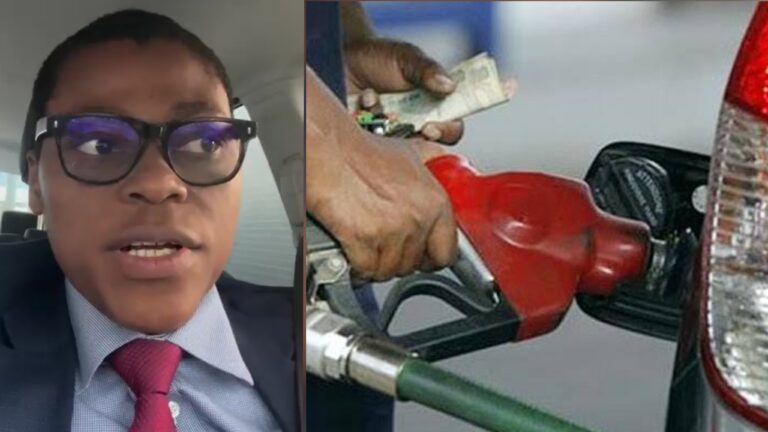
Rufai Oseni has sparked widespread discussion after expressing frustration over the sudden spike in petrol prices across Nigeria.
In a viral video, the Arise TV journalist revealed that he visited a filling station in the morning only to discover that petrol prices had surged from ₦1,225 per litre to approximately ₦1,335 within just 24 hours.
According to him:
“So this morning I just went to the filling station and I tried to buy fuel. Turns out from 1,225 it’s now about 1,335. The price went up in the space of one day.”
Oseni questioned the government’s response to the growing hardship caused by subsidy removal, asking what practical steps had been taken to protect ordinary Nigerians from the worsening economic strain.
He said:
“The question I’d like to ask this government is with all the subsidy being pulled out, what have you done to cushion the effect on the people?”
While acknowledging some relief in aviation fuel pricing, Oseni emphasized that petrol remains a major challenge for millions of citizens who rely on it daily for transportation and business operations.
Social Media Reactions
His comments quickly gained traction online, drawing mixed reactions from Nigerians:
Purple Teamer: “This one has changed the style of his propaganda….lmaoooo he’s working hard to build some political capital for his paymaster.”
Torchlightnews: “A whole country held hostage by unpredictable fuel prices, and the only consistency is silence from those in power.”
Idowu Raphael: “They will tell you, people are fighting in the middle east. We are in Africa and in Nigeria. We have more oil yet we pay more.”
King Miles: “The answer to his question is: nothing. They removed the subsidy, collected the savings, gave themselves jumbo salaries, and the palliative they promised is still a PowerPoint somewhere in Abuja.”
Prisca Nal: “Fuel jump from 1225 to 1335 in one day? Government subsidy removal dey slap us daily.”
Growing Public Concern
The rapid increase in fuel prices continues to fuel debates over economic reforms, subsidy removal, and the government’s ability to provide effective social support for struggling citizens.
For many Nigerians, the rising cost of petrol directly impacts transportation fares, food prices, and everyday living expenses, deepening concerns about inflation and economic hardship.
Published by Ejoh Caleb