
A Catholic priest has sparked widespread discussion online after issuing a strong warning to couples planning to marry, urging them to check their genotypes before making any serious commitment.
Reverend Father Prince Chidi Philip, a Catholic priest based in the diaspora, stressed that some genotype combinations should never be ignored because of the grave health risks they pose to future children.
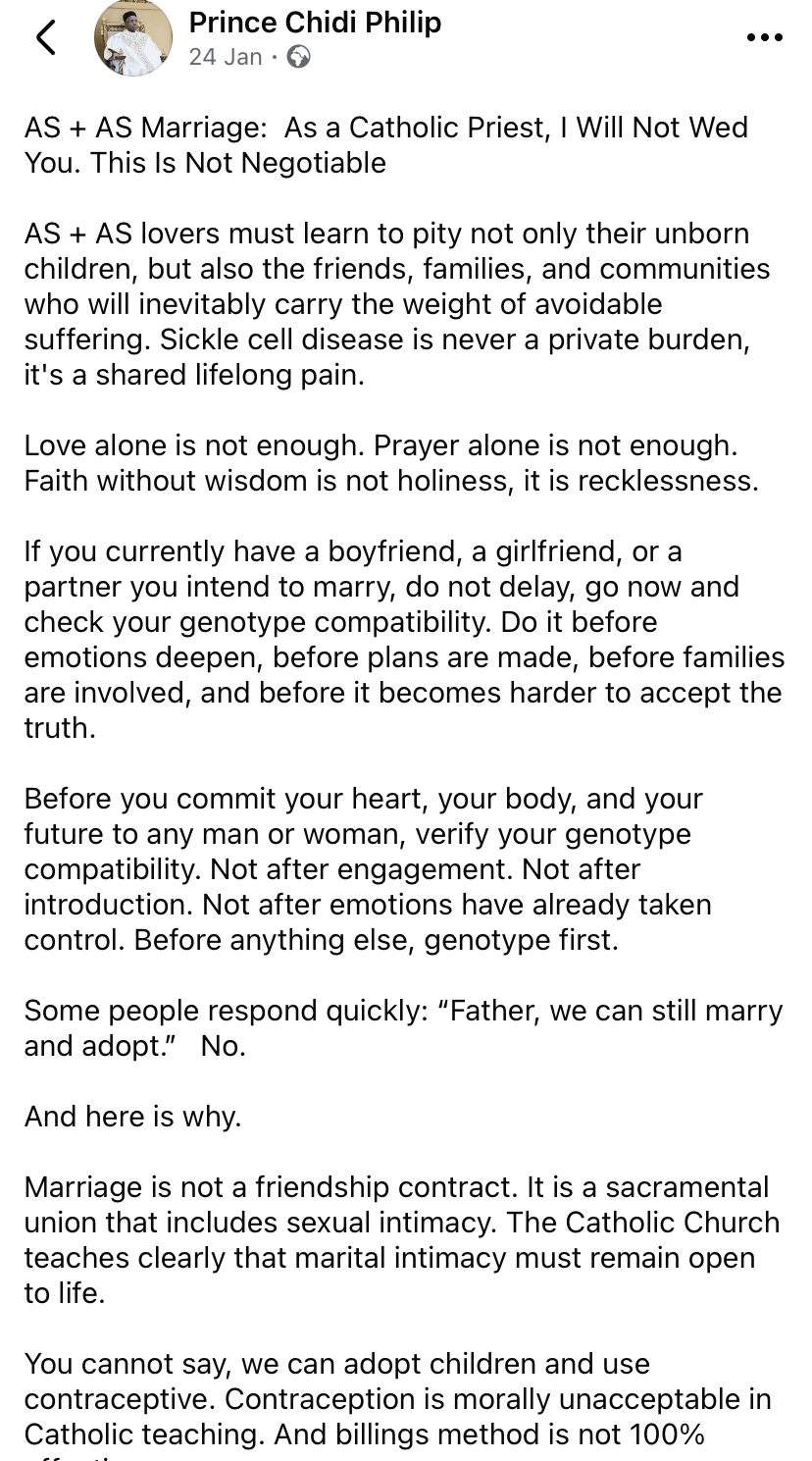
In a lengthy Facebook post, Father Philip declared that he would never officiate a marriage where both partners have the AS genotype, describing his position as “non-negotiable.”
According to him, children born to AS + AS couples are at high risk of developing sickle cell disease, a lifelong condition that brings immense physical, emotional, and financial suffering.
“AS + AS lovers must learn to pity not only their unborn children but also the friends, families, and communities who will inevitably carry the weight of avoidable suffering,” he wrote.
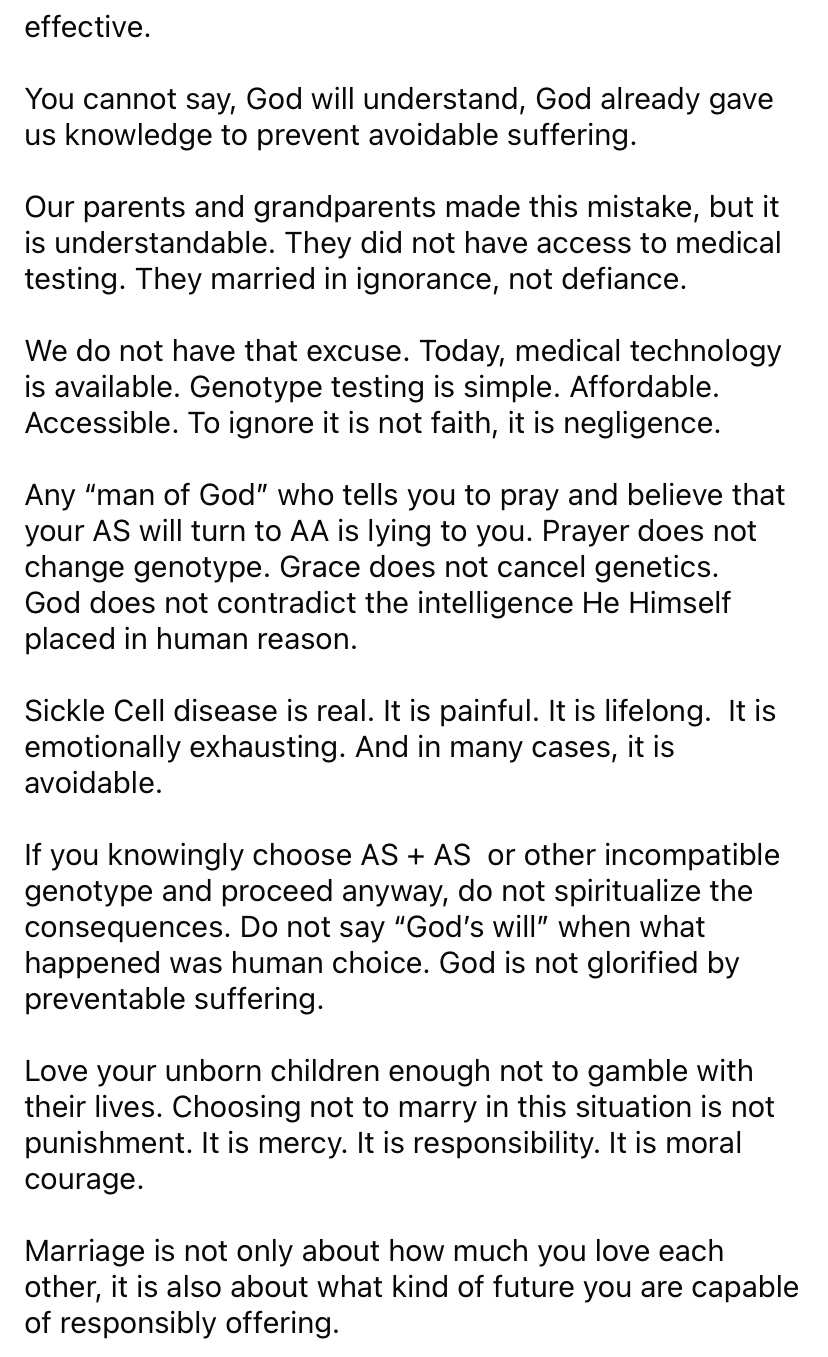
The priest challenged the common belief that love and prayer alone are sufficient foundations for marriage, warning that faith must be guided by wisdom.
“Love alone is not enough. Prayer alone is not enough. Faith without wisdom is not holiness, it is recklessness,” he stated.
Father Philip strongly advised couples to prioritize genotype testing early in their relationships, even before emotional attachment deepens.
He urged individuals to verify their compatibility before engagement, introductions, or family involvement, emphasizing that delaying the truth often leads to painful decisions later.
“If you currently have a boyfriend, a girlfriend, or a partner you intend to marry, do not delay. Go now and check your genotype compatibility,” he wrote.
“Do it before emotions deepen, before plans are made, before families are involved… Before you commit your heart, your body, and your future to any man or woman, verify your genotype compatibility.”
The priest’s warning comes amid ongoing efforts to raise awareness about sickle cell disease in Nigeria and beyond, where genotype incompatibility remains a major public health concern.
His comments have continued to generate debate online, with many applauding his firm stance while others argue for personal choice—but the message remains clear: genotype first, emotions later.
See below;
Published by Ejoh Caleb