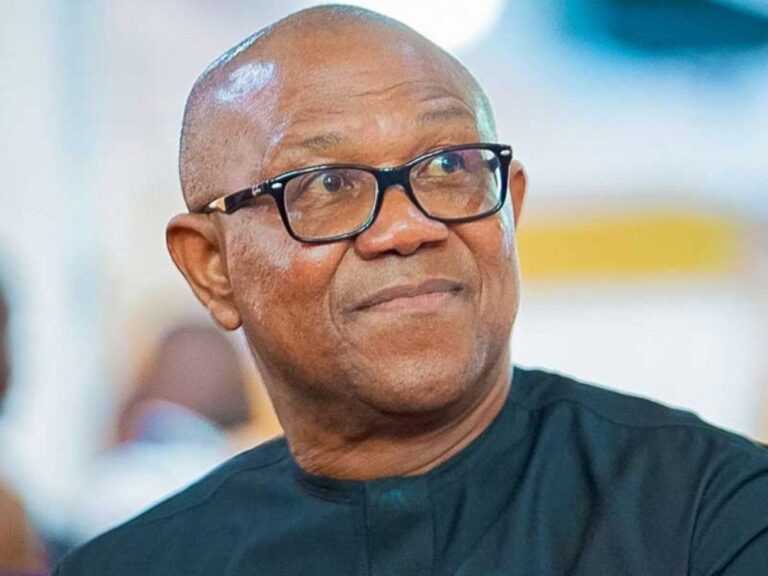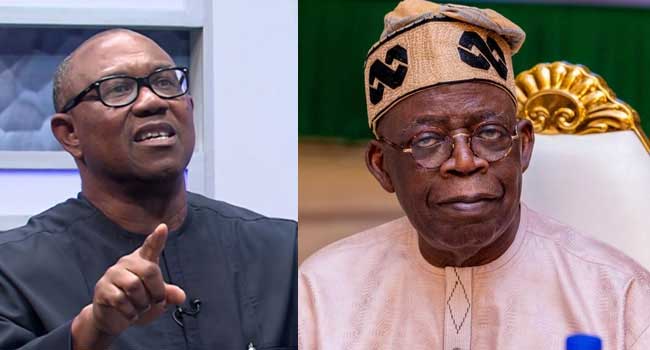
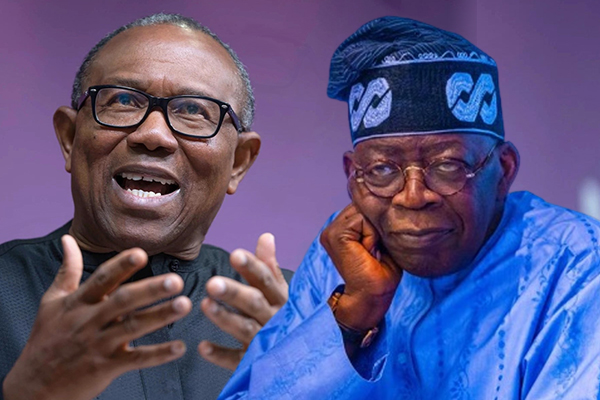
Peter Obi, the presidential candidate of the Nigeria Democratic Congress (NDC), has said everything is collapsing under President Bola Tinubu. He spoke at a town hall meeting in Imo State on Saturday, October 31.
“We have become more terrorised, and Nigeria is now number four,” he said. He added that Tinubu no longer has the energy to govern, and that stealing public money is the country’s greatest problem and “cannot happen under my watch”.
He promised that if elected, he and NDC vice-presidential candidate Rabiu Kwankwaso would unite the country and declare a state of emergency on insecurity.
Testing the “Number Four” Claim Against the Record (A Ranking Is a Position on a List Based on Chosen Measures)
The ranking is real. The Global Terrorism Index 2026, from the Institute for Economics and Peace, ranked Nigeria fourth for 2025, up from sixth the year before. It reported that terror attacks rose from 120 to 171 and deaths rose 46 per cent to 750. The 2025 edition had placed Nigeria sixth, moving up from eighth in 2023 and 2024.
Context matters for a fair reading. The index counts terrorism, mainly the Islamic State West Africa Province and Boko Haram, which caused 80 per cent of Nigerian deaths in the report. It does not capture every form of insecurity, such as banditry or kidnapping. It also shows that deaths peaked at 2,101 in 2014, fell to 392 in 2022, then rose to 533 in 2023 and 565 in 2024. Supporters and critics of the government can each find a point here, and voters can weigh it.
The Government’s Position So Far: Questioned Rankings and Rejected Claims of Fatigue
We found no reply to this speech. The government has questioned the index before. When Nigeria ranked sixth in the 2025 edition, the federal government and the Defence Headquarters dismissed the issuing body as an outsider.
On Obi’s claim that Tinubu lacks energy, APC National Chairman Nentawe Yilwatda replied earlier that the president works from morning till night. He mocked the idea that he is tired and asked whether the president was going for boxing or the 400 metres. These remarks are from an earlier exchange, and they were not an answer to this speech.
The Akpaka Forest Story: A Claim From Obi’s Own Record (Unverified Claims Need Independent Checking)
Obi told the town hall about his time as Anambra governor. He said he tried for six months to deal with criminals in Akpaka Forest, then asked former President Umaru Musa Yar’Adua for permission to use air and ground operations. He said the area is now a modern estate.
We could not confirm this account independently. In an August interview, Obi told a similar story but said he sought help from then-President Olusegun Obasanjo, and he also said “Yar’Adua is still alive”, which drew comment because Yar’Adua died in 2010. Both men were presidents during Obi’s years as governor, so the detail should be checked against the video and against records from that period.
An Old Promise With a Mixed Record: Earlier States of Emergency
A state of emergency on insecurity is not a new idea. In May 2013, then-President Goodluck Jonathan declared one in Borno, Adamawa and Yobe because of Boko Haram, without removing the governors. Daily Trust notes that insecurity there reduced but was not solved.
Others have urged the same step on Tinubu. The Northern Elders Forum asked him last month to declare one in the north. Senator Ali Ndume made a similar call in 2025. Critics have also warned about the idea. Tinubu himself opposed Jonathan’s order in 2013, calling it a destructive path, before declaring a state of emergency in Rivers State in 2025. Obi has not said how his version would differ.
What Drives Such Rhetoric: Fear, Frustration and a Tight Race (Campaign Rhetoric Means Strong Words Used to Win Votes)
People feel unsafe, and candidates know it. Insecurity affects farming, trade and movement, as Obi said in a September interview. A promise of a firm response speaks to real fear.
The campaign also rewards strong language. Opposition candidates often describe the government as failing, and government supporters describe the opposition as unrealistic. That is normal politics. The risk is that big claims, “everything is collapsing”, may be hard to test and may leave less room for details.
The Stakes for Voters and the Country: Safety, Trust and Credible Plans
For ordinary people, the question is concrete. Who can make their road, farm and school safer? A government that cannot protect people loses trust, and voters who feel unsafe may lose confidence in the whole political system.
The wider national cost is large. Insecurity damages farming, raises food prices, drives away investment and strains the military and police. A credible plan, whoever offers it, has real value. A promise with no details can disappoint, as earlier emergency declarations have shown.
Turning Slogans Into Plans: What Voters Can Ask of Every Candidate
Voters can ask for specifics from Obi and from the government. How many more troops or police would be needed, and how would they be paid? Would state police be used, and with what safeguards? How would a state of emergency respect elected governors and the courts? What results would be measured, and by when?
The government can respond by showing data on its own record, including the 2025 terrorism figures and its plans for 2027. The media and civil society can check claims on both sides and publish the results.
Words on the Stump, Proof in the Plan: Our Reading of an Election-Season Pledge
We take no side between Mr Obi and Mr Tinubu. Mr Obi has a solid basis for his “number four” point, though the index measures terrorism, not everything. His claims about Akpaka Forest and about the energy of the president remain claims, and we cannot confirm them.
What we ask is plain. If a candidate promises a state of emergency, he should explain what it would do, how long it would last and how it would be checked. If a government defends its record, it should show the numbers.
Nigerians are tired of slogans from every direction. They want safe roads and schools. The candidate who explains how will earn more than applause.
Published by Ejoh Caleb