An Enugu East Magistrate’s Court sitting at Nkwo Nike has remanded a 45-year-old man, Ani Chidi, in prison custody after the police arraigned him on Monday, October 5, 2026. Remand means he is held in custody until the case continues. He is accused of publishing a video of a September 12 attack on members of the Nigeria Democratic Congress (NDC) during a political meeting at Obuoffia Awkunanaw. He faces three counts of cybercrime and alleged criminal defamation under Section 24(2)(a)&(c)(i) of the Cybercrimes Act. Criminal defamation is the offence of publishing false statements that harm someone’s reputation.
He has been remanded, not convicted, and the charges are allegations. Most reports call him Ani Chidi, while others name him Ani Samuel Chidi. The NDC calls him Chidi Ezeani.
What the police allege (the charge)
According to the charge sheet, Chidi posted footage of the attack on social media platforms and news outlets. The police say he falsely accused three people, Ani Nnabuike, Solomon Ifeanyi and Monday Anninwe, of being members of the armed group that attacked the meeting. The prosecution also alleged that the publications threatened the men and their families with possible attacks from members of the public. The case number is given as MEN/151c/2026 in your brief and MEE/151c/2026 in another report. A police prosecutor, Ajogwu, presented the case before Chief Magistrate F. E. Chukwu.
We have not seen the footage, and we do not know whether the three named people took part in the attack. They are also presumed innocent of any wrongdoing. Neither the accusation in the video nor the police claim that it was false has been tested in court.
The attack behind the case (what is known about September 12)
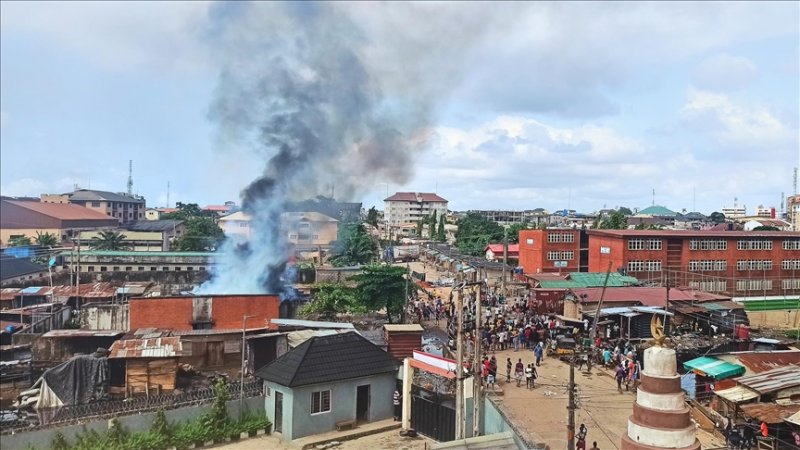
The Enugu State Police Command confirmed that armed hoodlums disrupted an NDC meeting in Ndiuno-Obuoffia with sporadic shooting. The police said two attendees were injured. The NDC says eight of its members were shot and accuses the ruling All Progressives Congress (APC) of sponsoring the attackers. We found no response from the APC in the reports we reviewed, and the claim is an allegation.
SaharaReporters reported that the Inspector-General of Police ordered arrests on September 22, and that detectives from Zone 13 in Anambra State arrested a traditional ruler, Igwe Obiora Igwesi, his brother, a former lawmaker, and eight others. Those are reported arrests and allegations, and the reports we saw do not say whether any of them has been charged.
What the NDC says about the prosecution (the opposing view)
The NDC condemned the case, calling it a malicious abuse of the judicial process. It accuses the police of going after a person who recorded evidence of the violence while the people it accuses of the attack have been released. The party also claims that Chidi was “secretly” arraigned. We did not find a statement from the police or the Enugu State Government responding to these claims. Those would need to be heard for the picture to be fair.
A law with a contested record (past cases under the cybercrime law)
Section 24 of the Cybercrimes Act has been controversial for years. In March 2022, the ECOWAS Court ruled that the old Section 24 was arbitrary, vague and repressive, and ordered Nigeria to repeal it. The 2024 amendment replaced it, but civil society groups say the new version still allows abuse.
In the years since, journalists and activists have been arrested and charged under it. For example, four journalists from Informant247 were arrested and charged with cyberstalking and defamation in February 2024. The Socio-Economic Rights and Accountability Project (SERAP) also noted that police filed cybercrime charges against activist Dele Farotimi. These are the views of rights groups, and the Federal Government’s response was not in the reports we found. The outcomes of those cases are not given in the sources we saw.
This history does not tell us what a court will decide in Chidi’s case. It explains why many observers will watch it closely.
Two legitimate concerns in tension (what lies behind the dispute)
Both sides raise a real concern. People have a right not to be falsely accused of violent crimes online, especially in a tense political season, when a false accusation can lead to threats or revenge attacks. Prosecutors say that is what happened here.
On the other hand, people who film violence provide evidence, and fear of prosecution may stop others from doing so. When a witness is charged while the attackers are not, that sends a worrying message, as the NDC argues.
Election season makes the contest sharper. Ahead of the 2027 elections, a clash between rival parties turns every arrest and every video into a political argument.
Fear, trust and the road to 2027 (effects)
For Chidi, the effect is immediate: he is in custody while his case continues. For the three men named in the charge, an accusation of joining an armed attack can bring real danger, whether it is true or not. For the wounded, justice is still awaited.
For the country, the case touches on the credibility of the police, the safe use of recorded evidence and freedom of expression. If people believe that filming violence is risky, fewer will do it, and that makes violence harder to prove. If they believe that false accusations go unpunished, trust and safety also suffer.
Ways to protect both evidence and reputations (possible solutions)
The police should investigate the attack on the NDC meeting fully and publish what they find, including the status of the ten people reportedly arrested. The court should hear Chidi’s case quickly and fairly, and consider bail within the law.
Lawmakers can review the cyberstalking provision to reduce vague wording, as rights groups urge. Anyone who films violence can share the footage with the police, a lawyer or a trusted media organisation, and avoid naming individuals in public posts without proof. Media houses should check names before publishing. Political parties should also keep their supporters from threats and retaliation.
Justice should cover both the shooting and the footage (our view)
We cannot say whether the three named men were involved or not, and we cannot say whether Chidi’s posts were wrong. These are matters for the court, and each person deserves a fair hearing.
But the sequence of events troubles us. Two sets of questions need clear answers: who attacked a political meeting with gunfire, and whether a person who filmed it should be in prison. We hope the police will explain both. If the attackers are brought to court and Chidi’s case is handled fairly, the public may regain some trust. If not, many will conclude that evidence is more dangerous than violence, and that would harm the whole political process.
Published by Ejoh Caleb