
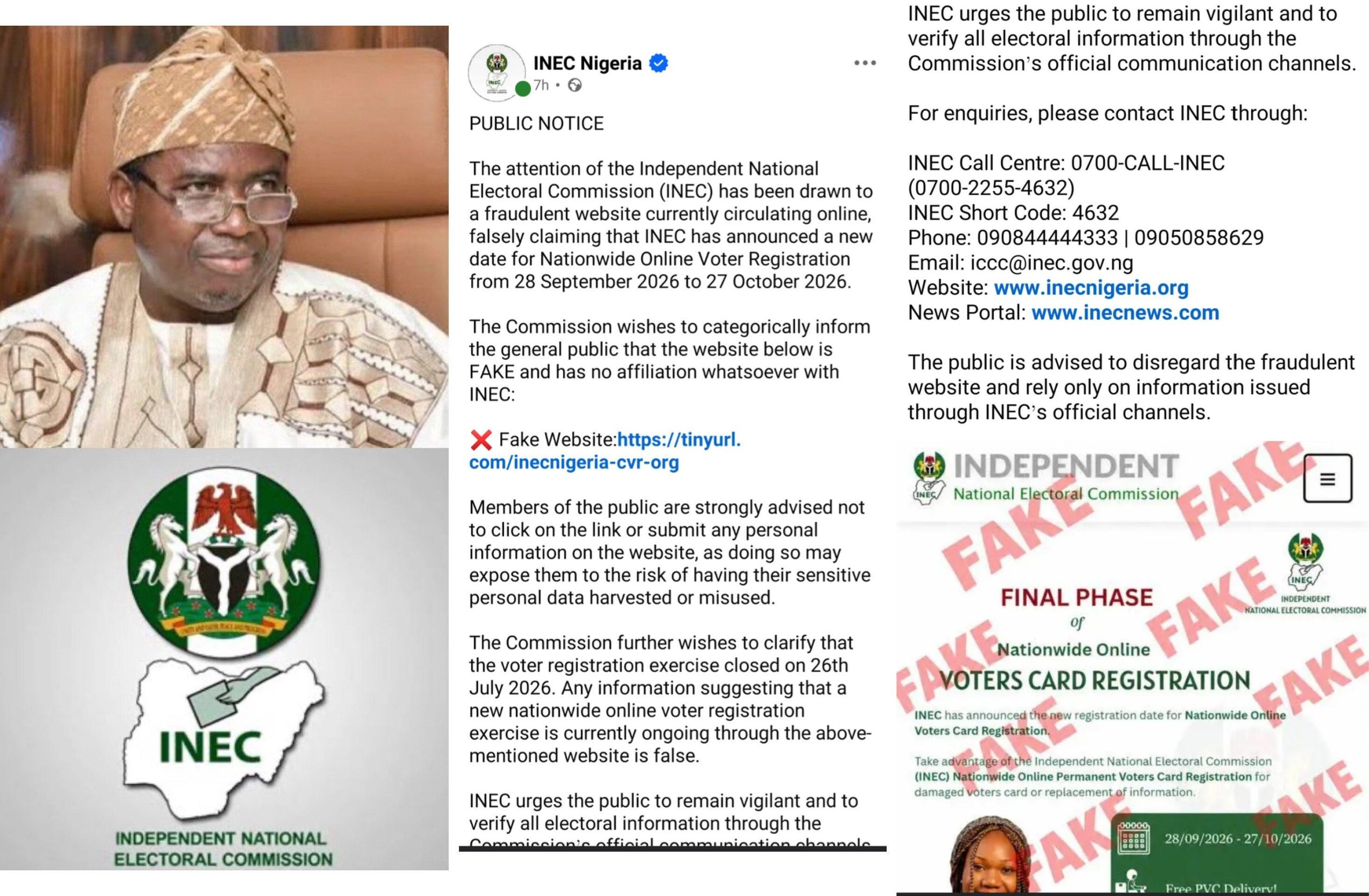
The Independent National Electoral Commission (INEC) has cautioned Nigerians against a fake website claiming to offer online voter registration. In a public notice issued on Saturday, October 3, 2026, INEC said the website is fraudulent, has no link to the commission, and falsely claims that a new nationwide online registration exercise is running from September 28 to October 27. The commission said the real registration exercise ended on July 26, 2026.
What the fake site promised (the claims INEC rejected)
The website advertised what it called the “Final Phase of Nationwide Online Voter Card Registration.” It said people could update their voter details, transfer their registration to another polling unit, and replace lost or damaged Permanent Voter Cards (PVCs). It also claimed that registration and card delivery were free.
INEC told the public not to click on the link or give any personal information. It warned that doing so could expose users to having their sensitive data harvested or misused. Most reports identify the site as a page hosted on a free blogging platform, which is one reason it was easy to set up. Nairametrics lists a different web address, so we have not printed either link here, to avoid sending readers to it.
Timing that makes the warning urgent (PVC collection is close)
The notice comes only days before INEC begins nationwide collection of PVCs on October 9, following the registration of more than 10.7 million new voters. In a period when many Nigerians are asking where and how to get their cards, a fake site that promises easy services can look believable.
Not the first time (past cases of fake INEC sites and what happened)
INEC has had to disown fake websites many times. In August 2021, the then National Commissioner Festus Okoye said scammers were circulating its old recruitment advert to lure and defraud people. He said the commission’s recruitment portal was no longer active, and recalled that INEC had issued warnings in May and December 2020 about fake employment letters.
In January 2023, ahead of that year’s elections, INEC warned about a fake portal for ad hoc staff recruitment. It said the real portal had been closed since the exercise ended in December. Early in 2026, it again disowned a fake “Ad-hoc Staff Recruitment Portal 2026.” It advised people who had already registered there to stop and reapply only through official links, and said real INEC websites end with inecnigeria.org.
At the end of August 2026, INEC raised an alarm about a fake 2027 election recruitment portal. These warnings show a repeating pattern, and they come every time election activity increases. In the reports we found, no one has been reported arrested or prosecuted for running these fake sites, so the public cannot tell whether anyone has been held to account.
Why scammers target elections (what makes these sites work)
Election periods bring attention, urgency and deadlines. People who missed registration may be eager for another chance, and the word “free” is attractive. A site that looks official, uses INEC’s name and lists real-sounding services can easily fool people who are in a hurry. Creating such a page costs little, and it can reach many people through social media sharing.
Scammers may also collect personal information such as names, phone numbers and voter details. This can be sold or used for identity fraud, or for further scams.
Risks for voters and for the election (effects)
For an individual, giving data to a fake site can lead to identity theft, unwanted calls or money lost. Someone who believes he or she has registered may also miss the real process and find on election day that no registration exists.
For the country, the harm is wider. Fake sites spread false information about electoral dates and procedures. That can confuse voters, reduce trust in INEC and weaken confidence in the process before the 2027 elections. If a large number of people are misled, turnout could suffer.
How to protect yourself and what authorities can do (possible solutions)
Voters should check any election information on INEC’s official channels only. A genuine INEC website address ends with inecnigeria.org. INEC also listed its contact lines for enquiries: 0700-CALL-INEC (0700-2255-4632), the short code 4632, and the email [email protected].
Do not click links sent through messages, social media or blog pages. Do not pay anyone who claims to register you or deliver your card, because INEC says its services are free of charge. If you have entered details on a suspicious site, stop and report it. Anyone who needs to register or change details should wait for an official announcement from INEC.
Authorities can help too. INEC can place its official links clearly in every announcement, work with platforms to take down fake pages quickly, and refer cases to police cybercrime units. Prosecutions would also send a message that the fraud has a cost. Civil society groups and the media can spread verified information to reduce the chance that fake notices spread.
Verify before you click
We believe INEC was right to act quickly and name the fake site. A clear public notice is a good first defence. But warnings alone are not enough, because the same trick keeps returning. What would help most is a visible follow-up: takedowns, arrests and charges where the people behind these sites can be traced.
For voters, the lesson is simple. In an election season, official-looking pages will multiply. Before giving out personal details, check the source. If it is not from INEC’s own channels, treat it as unsafe. Protecting your personal data is part of protecting your vote.
Published by Ejoh Caleb