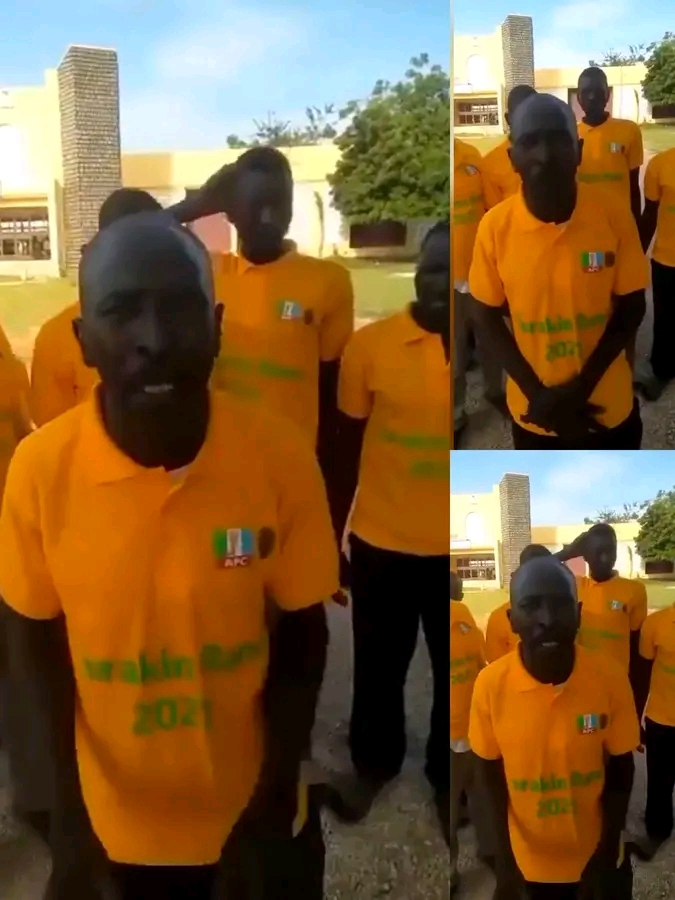
Residents who attended an All Progressives Congress (APC) campaign rally in Kano State have publicly complained after reportedly receiving just ₦3,000 each for taking part, with some saying the amount didn’t even cover the transport fare they borrowed to get there. In a video circulating online, one of the attendees said in Hausa: “If you people keep giving us ₦3,000 for APC campaign, we won’t come again. Some of us borrowed transport fare to come to the campaign ground, and they are only paying us ₦3,000.”
The complaint follows a large APC mobilisation drive in Kano, where the party said it received more than 136,000 new members and unveiled a support structure for President Bola Tinubu’s 2027 re-election bid. The video has sparked mixed reactions online, with some criticising the reported payment while others have questioned residents for accepting money to attend political rallies in the first place.
Not the First Complaint of Its Kind This Campaign Season
This is not an isolated incident. Just a week earlier, a separate video showed a group of APC supporters, dressed in campaign shirts bearing President Tinubu’s image, complaining that they were paid only ₦1,500 each after an entire day of dancing and campaigning under the sun. One participant was recorded saying, “One thousand five hundred naira for what? Family man?” while others held up the notes to the camera in apparent disbelief. According to reports around that video, the participants had expected to be paid as much as ₦5,000 for the day’s work.
The practice of paying attendees to appear at political rallies is a long-standing feature of Nigerian campaign culture, with hired crowds and “mobilisation fees” a recurring feature of elections at every level, from local government to the presidency.
Why Parties Pay for Crowds, and What It Costs Everyone Involved
Political parties use paid attendance to guarantee visible crowds at rallies, since a large, energetic turnout is seen as a sign of momentum and popularity that can influence media coverage and public perception ahead of elections. For many attendees, especially in areas facing high unemployment and economic hardship, showing up to a rally for a modest cash payment can be one of the few immediate earning opportunities available, even if the amount barely covers their costs.
But this arrangement carries real costs. For the individuals involved, spending a day campaigning only to receive a few thousand naira, sometimes less than their transport fare, leaves them worse off than before they attended, deepening frustration with a system that treats their presence as a transaction rather than genuine political support. For political parties, videos like this one undermine the image of organic grassroots enthusiasm they are trying to project, replacing it instead with public scrutiny over vote-buying-adjacent practices. At the national level, the normalisation of paying for rally crowds feeds a broader problem in Nigerian democracy: it blurs the line between genuine political participation and transactional politics, making it harder to gauge real public support for any party and reinforcing cynicism about elections being decided by money rather than ideas.
How Nigeria Could Move Away From This Practice
Electoral integrity advocates have long called for stronger regulation and transparency around campaign spending, including how parties mobilise and compensate rally attendees, so that such payments don’t blur into disguised vote-buying ahead of elections. Political parties could also address the underlying complaint directly by being more transparent about what attendees will be paid before asking them to show up, reducing the kind of public frustration seen in these videos.
More broadly, tackling the economic hardship that makes a few thousand naira an attractive enough incentive to spend a full day campaigning would reduce the demand for this kind of paid mobilisation altogether. Civil society groups have also pushed for greater voter education so that political participation is driven by policy engagement rather than cash incentives, whether from APC or any other party.
A Rally Crowd That Wasn’t Shy About Speaking Up
We think this video captures something important about the current mood ahead of 2027: even people showing up and wearing party colours are willing to publicly call out what they see as unfair treatment. Whether the complaint is about ₦1,500 or ₦3,000, the underlying message from both videos is the same, people who gave up a day’s earning potential feel shortchanged for their time and effort. We’re not taking a position on any party here, but we do think it’s worth asking why paying for rally attendance has become so normalised in Nigerian politics that people now expect it, and only complain when the amount feels insulting rather than questioning the practice itself. As 2027 approaches, we suspect this won’t be the last video of its kind, from any party’s rallies.
Published by Ejoh Caleb