
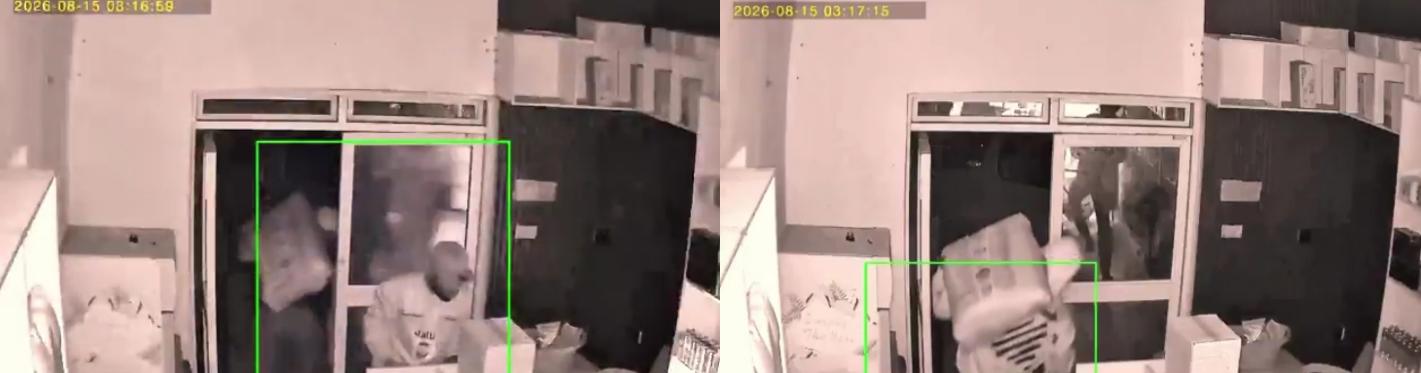
A shop owner in Owerri has reportedly been robbed after thieves broke into the shop around 3 a.m. on Saturday, August 15. According to the owner, the criminals disabled the shop’s security first — removing the CCTV camera and switching off the solar-powered security light — before making away with inverters, lithium batteries, a laptop, solar panels, breakers, cables, power banks, and other valuables.
The thieves reportedly also broke into a neighbouring supermarket during the same operation. The video now circulating online was captured by the supermarket’s own CCTV camera, before the criminals eventually removed that camera too. We could not independently confirm further details of this specific incident, such as the exact value of items stolen or whether a police report has been filed, beyond the shop owner’s account and the video.
A Familiar Pattern in Imo State and Beyond
This is not the first time solar equipment has been targeted in Owerri. In July 2026, another businessman in the city shared CCTV footage showing thieves carting away solar products he valued at over ₦100 million, using a vehicle to haul the stolen goods away. Just this month, police in Kano recovered stolen solar inverters worth about ₦59.2 million and arrested four suspects, after finding the equipment hidden in an uncompleted building.
The problem extends beyond individual shops. According to the Association of Licensed Telecommunications Operators of Nigeria, criminal networks stole hundreds of generators, batteries, and cables from telecom sites nationwide in 2025 alone, disrupting network services for millions of subscribers.
Why Solar Equipment Has Become Such a Target
Inverters, lithium batteries, and solar panels have become attractive to thieves because they hold high resale value while remaining relatively easy to move and hard to trace once removed from a property. Many of these components are also sold off separately in secondary markets, sometimes through informal scrap hubs where stolen batteries are stripped down and resold before owners can report them missing.
Security experts also point to a common weakness: business owners often invest heavily in the panels themselves but leave batteries, inverters, and cabling in unsecured rooms or exposed areas, and rely on a single security measure — like one CCTV camera or one solar light — that thieves can disable in seconds, as reportedly happened in this case.
Beyond the direct financial loss to individual shop owners, this wave of theft threatens Nigeria’s broader push toward renewable energy. Nigeria has leaned on solar power to cushion its unreliable national electricity grid, and repeated theft raises the cost of adopting solar solutions, discourages further investment, and makes clean energy less competitive against other power sources at a time the country can least afford it.
What Could Help Protect Shop Owners
Security specialists recommend that businesses avoid relying on a single security device and instead combine multiple layers of protection — for example, pairing CCTV with a separate motion-sensor alarm, so that disabling one device does not leave the property completely exposed. Storing high-value components like batteries and inverters in reinforced, less visible spaces rather than easily accessible rooms is also recommended, since thieves often target the weakest, most exposed point of a property first. Some installers now offer inverters with remote shutdown capability, which allows an owner to deactivate a stolen unit remotely and render it worthless to resell.
On a broader level, tackling the resale side of the problem would help too. Continued police raids on informal scrap markets, like the ones that led to the recent Kano arrests, and closer monitoring of secondhand equipment sales could make it harder for stolen solar gear to be laundered back into the market.
Guarding the Backbone of Nigeria’s Power Solution
We find it troubling that the very equipment Nigerians have turned to because the national grid keeps failing them is now the equipment criminals are targeting most. Every stolen inverter or battery bank is not just a personal loss for a shop owner — it is a small setback for a country trying to build a more reliable, independent power future. Until security agencies treat solar equipment theft with the same urgency as other organised crime, and until more business owners can afford layered security rather than a single camera or light, incidents like the one in Owerri will likely keep repeating. We hope the shop owner and the supermarket are able to recover their losses, and we hope this case is investigated properly rather than left to fade online.
Published by Ejoh Caleb