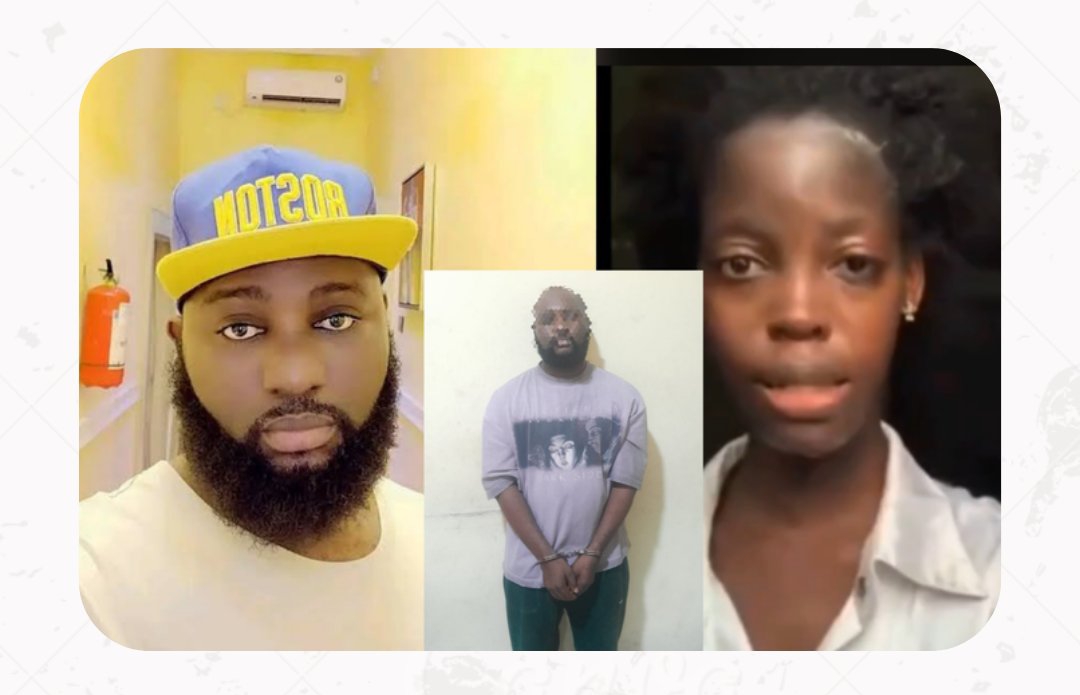
A 20-year-old Nigerian nursing student identified as Favour Agbro has died by suicide after recording a final video accusing a popular Asaba-based content creator, known online as “Odogwu of Asaba,” of raping her. The suspect, identified by police as 44-year-old Ifeanyi Ogbonna, has since been arrested by the Delta State Police Command.
What Favour Said Happened
In the video she recorded before her death, Favour explained that she reached out to Ogbonna after seeing his online posts about teaching people how to make money through content creation. She said she told him she had no financial support and was struggling to fund her education. She also said she had mentioned turning down an earlier offer from another man who wanted her to come to Abuja, because she did not want to exchange sex for financial help and preferred to work for what she needed.
She alleged that after hearing her story, Ogbonna invited her to Asaba and arranged to meet her at a hotel. She said she believed, because of his popularity as a content creator, that he would not hurt her for fear of being exposed online. She alleged that once they were in the hotel room, he raped her despite her pleading with him and telling him she was a virgin, and that he later told her he was happy he had done it. She further alleged that he told her nothing would happen to him because of his influence in Delta State.
What Police Have Confirmed
The Delta State Police Command said the arrest followed a petition alleging that the victim travelled to Asaba on June 1, 2026, after Ogbonna invited her, having advertised a content-creation training programme on his social media platform. Police said he allegedly took her to a hotel, where he raped her and subjected her to physical violence, and that she later returned home visibly distressed and told her parents what happened. Police confirmed that before her death, she recorded a video recounting her ordeal and the emotional distress that followed. The suspect was arrested at his residence in Asaba, following a petition by human rights activist Comrade Israel Joe, and is currently in police custody. The Commissioner of Police, Yemi Oyeniyi, has assured the family and the public that the case will be thoroughly investigated.
News reports differ slightly on some details, including the suspect’s exact age (40 to 44 depending on the source) and the victim’s age (20 or 21), which is common in the early hours of a fast-developing case. As with any active police investigation, the allegations against Ogbonna remain unproven in court, and he is entitled to a fair legal process.
In a separate video that has also surfaced online, reportedly recorded after his arrest, Ogbonna is seen appearing to plead with the victim’s parents, saying: “This is a very terrible mistake. I’m ready to give everything.” This video has not been independently verified by mainstream news outlets at the time of writing.
A Pattern Nigeria Cannot Ignore (Past Cases)
This case fits into a troubling pattern where online influence and popularity are used to gain the trust of young, financially struggling women, only for that trust to be exploited. In February 2026, a 23-year-old man was remanded in a Lagos correctional facility after he allegedly lured a content creator and her friend to Ajao Estate under the guise of a modelling engagement, then sexually assaulted them and threatened to leak their private material if they reported him; he was only arrested after the video of the incident went viral and caused public outrage. Nigeria has seen repeated cases like this, where men in positions of online or social influence allegedly use promises of mentorship, training or financial help as a way to isolate and assault vulnerable young women, who often stay silent for fear that a well-known figure’s popularity will protect him and work against them.
Why This Keeps Happening (Causes and Effects)
Financial desperation makes young people vulnerable. Favour reportedly reached out to Ogbonna specifically because she had no one to support her financially, a reality shared by many Nigerian students.
Online popularity is mistaken for safety. She reportedly believed his public profile would stop him from hurting her, when in reality, influence can just as easily be used to intimidate victims into silence.
Fear of not being believed. The suspect allegedly told her that his influence in Delta State meant nothing would happen to him, a threat that keeps many survivors from reporting immediately.
Delayed reporting costs lives. By the time formal police action began, the trauma had already driven Favour to take her own life.
The effects of this case are devastating and irreversible. A young woman pursuing an education and trying to avoid exploitative offers is now dead. Her family is left with unbearable grief, and public trust in the safety of online mentorship offers, especially those directed at young women, has taken another hit.
What Needs to Change (Possible Solutions)
Faster, victim-centred police response when assault allegations involve influential or public figures, so victims do not feel the system favours the accused.
Mental health and crisis support for survivors immediately after they report an assault, since trauma can escalate quickly without intervention.
Greater scrutiny of “mentorship” offers made by online influencers to young people, especially where financial vulnerability is involved.
Public education for young people on recognising exploitative offers, including the false sense of safety that comes from someone’s online popularity.
Accountability for platforms, which should have clearer ways for users to report influencers accused of exploiting followers.
My Thoughts
I keep coming back to one detail in this story: Favour said no to a man who wanted her body in Abuja because she chose to work hard instead of trading herself for help. That choice should have protected her. Instead, it was someone she trusted more, because he was “popular” and had a public reputation to protect, who allegedly hurt her the most. That is what makes this so painful. Popularity is not character, and it should never be treated as a guarantee of safety. If the allegations against Ogbonna are proven true, his influence should not save him from consequences, it should be the reason he faces the full weight of the law. I hope Favour’s family gets the justice they deserve, and I hope her story makes other young people, especially women navigating financial hardship, more cautious of offers that sound too good to be true.
Published by Ejoh Caleb